 Home
Home
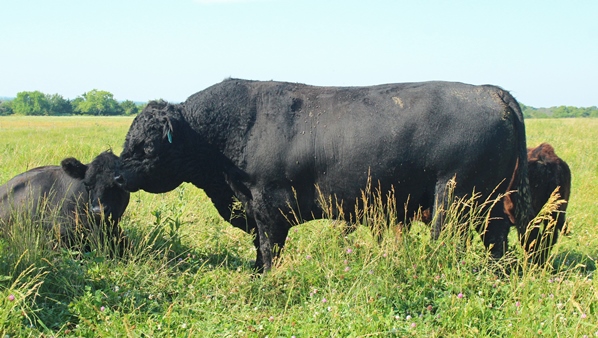
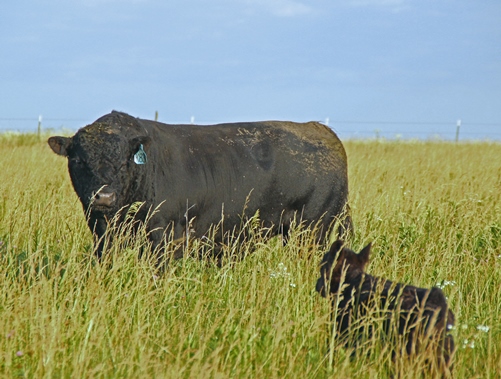
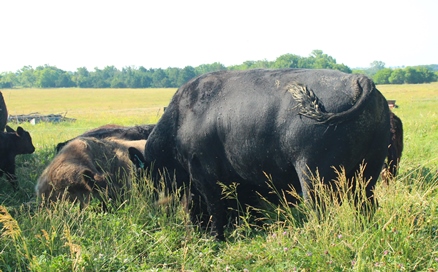
Kaiser of Gnomes End. Smooth and beefy, good dispostion, calf birth weights ranging from 62-75#. We have sons and daughters for sale spring and fall.
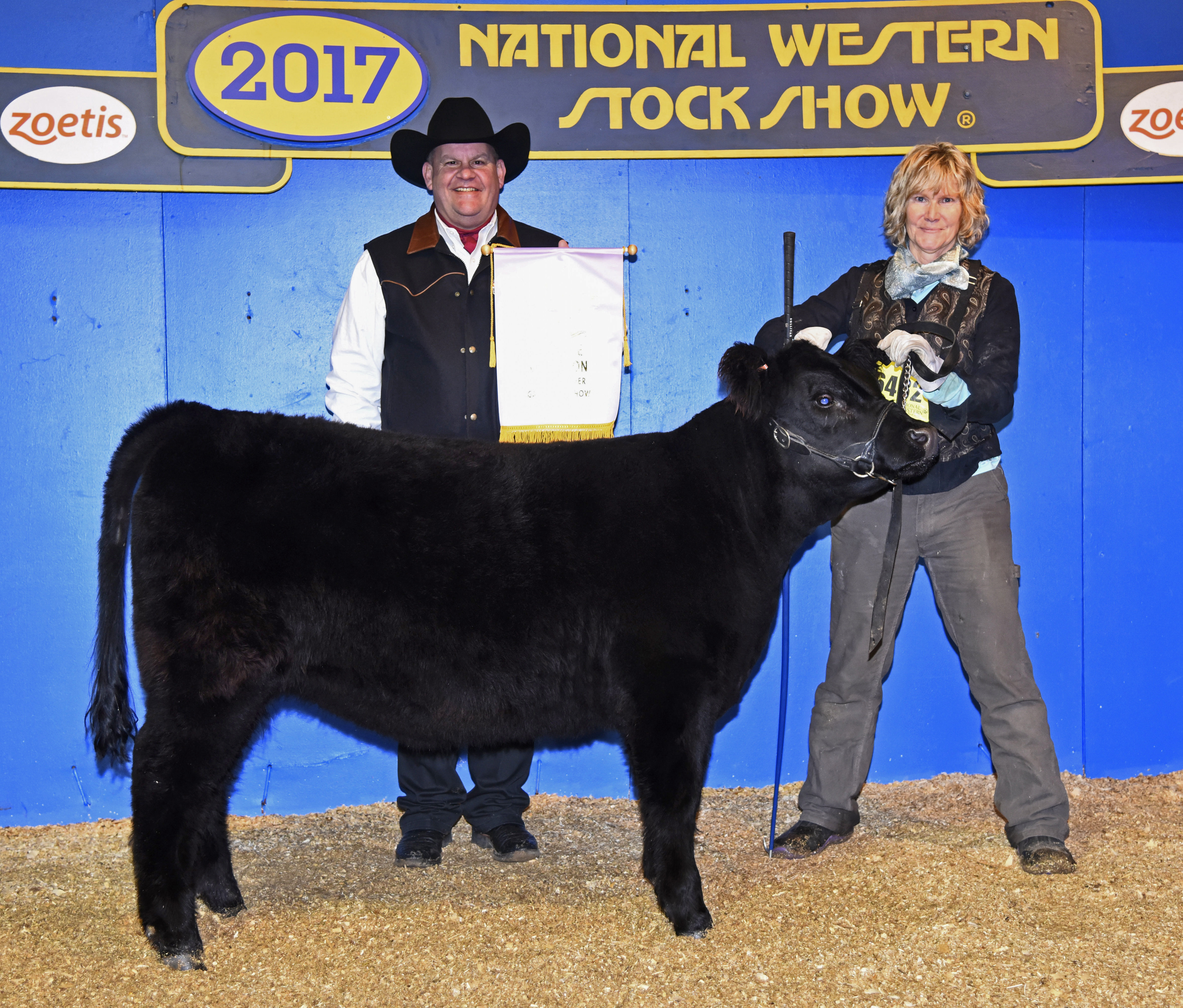
RFLTD Distraction D1, a Xenon granddaughter, won Reserve Champion Junior Heifer at the 2017 NWSS Galloway show. Not just another pretty face!
Be sure and Like Renaissance Farms Ltd on Facebook...We post many more photos there.
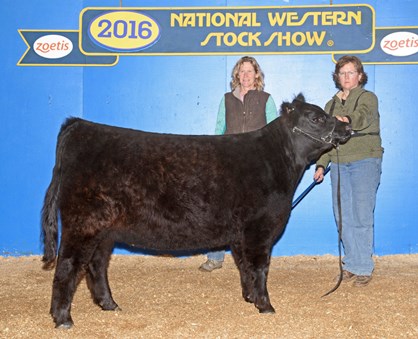
RFLTD Bramble B18, Yearling Heifer Division Reserve Champion at the 2016 Denver Stock Show. She had a LOT of interest from passersby in the Yards. She is a Xenon daughter. We have semen available on Xenon. Contact us as you make preparations for your AI planning this spring!
Keep up with us on Facebook.... we post a lot more photos there!
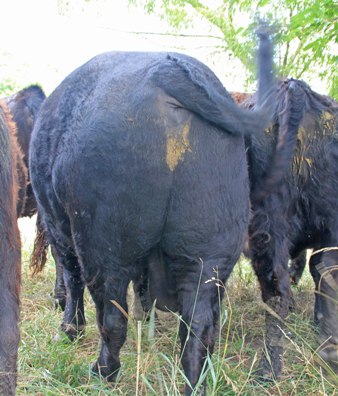
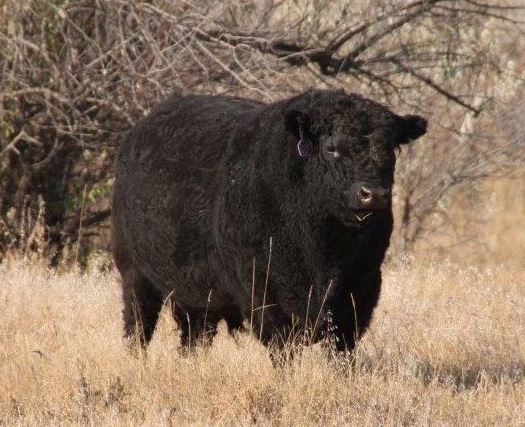
RFLTD Xenon. Muscling meets efficiency. Xenon age 3 above. Coming 5 below. Frame 4.5, 2000# mature weight. Best part is, we have semen available.
 |
Grassfed Carcasses from RFLTD Xenon's half brothers.
Brand New! Videos of our cattle accessible via Youtube. Visit the Renaissance Farms Channel and take a peek at the herd of Galloway cattle going about their daily life.
Ultrasound results from the 2012 Denver Stock Show Here
Cattle.com interviews AGBA President Harley Blegen about the Galloway Breed at the 2012 Denver Stock Show. Click Here
Galloway Breeding Stock
Our animals have been selected for a forage-only means of production. Our pastures are not great, lots of go-back ground, plenty of it on farmed out, highly eroded soils. We are in east central Kansas, so our cattle are no strangers to hot and humid summers. Cattle appropriate for grassfed beef production are not your typical sale barn cattle, making the right genetics difficult to locate. If you are searching for breeding stock for your conventional OR grassfed beef operation, contact us. We might have what you are looking for. Even if we don’t have what you’re looking for, we have connections. Call us at (620) 343-6757 or email us for current offerings.
RFLTD Xenon
Denver 2011 Ultrasound results: Wgt 560#, REA 9.05, REA/CWT ratio 1.62, IMF 3.45%, BF .11 This calf was weaned in mid November and lightly fed 8 weeks until
the show. He is presently at work in our herd siring our fall 2012 calf crop.
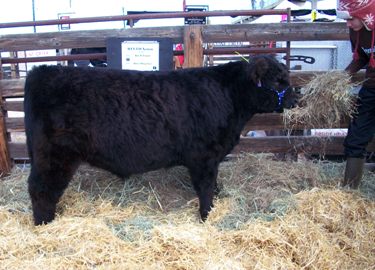
RFLTD Xenon, dob 5/16/10, pictured 1/16/11 at the National Western Stock Show, Denver
Nomad's Dreamer
RFLTD Nomad's Dreamer (below), 3 years of age, grazing fall pasture. He combines champion carcass genetics of the 1970's with Certified Meat Sire genetics of the late 60's and early 70's.
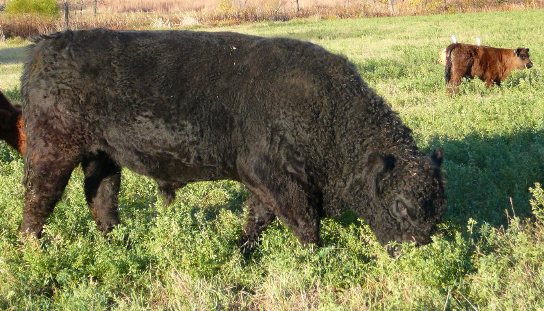
RFLTD Nomad's Dreamer —Renaissance Farms Ltd
McDuff
Renaissance Farms Ltd herdsire, McDuff of Lone Pine.
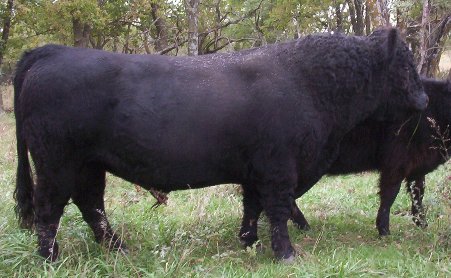
McDuff —Renaissance Farms Ltd
Add Galloway genetics to your beef program
Chances are you've landed on our breeding stock page because you already know you want to add Galloway genetics to your beef program. If calving-ease, hybrid vigor, carcass quality and feed efficiency are important factors in your beef program, you need Galloway genetics in your herd. Maternal efficiency is rapidly becoming one of the most significant attributes of the profitable cowherd. Galloway excel as an efficient maternal breed.
Galloway were known centuries ago for their durability in the wilds and their premium meat at the butchers block.
Our cattle are raised under a 'forage-only' plan. We expect our cattle to exhibit a strong foraging ability that lets them see to their own good growth and health.
The Galloway Haircoat: What you need to know!
Galloway grow a double haircoat as fall sets in, and by winter the outer guardhairs can reach lengths of 6 inches. This is their raincoat... the perfect mechanism for shedding
rain and keeping snow accumulations from reaching the second layer of the haircoat, the soft downy heat conserving undercoat. Come summer... the coat sheds, with many
Galloway becoming completely slick, while others may retain a short felt layer along their back and barrel. As the animals age, shedding occurs more quickly and more
thoroughly. And that's what you need to know about Galloway haircoats!
Sericea lespedeza
Got Sericea? For years we've wondered if our Galloway would consume Sericea, but we've found it in our pastures on only one occasion. But in 2009 we leased an additional 32 acre
pasture that lies adjacent to another lease. Mid summer we were disheartened to discover a patch of Sericea approximately 1/8 acre in size. The cattle had not had access to that pasture yet,
but in early October about a dozen yearlings were added. Two weeks later we were checking cattle and noticed that the Sericea patch was completely gone... they had eaten it to the ground. This is what we observed. We will keep an eye on this pasture again this year, and post additional findings here. But Galloway are known to be non-selective grazers, and we have observed them regularly
consuming plants that neighboring herds do not. So we think there is a very good liklihood that our Galloway will continue to dine on the Sericea, saving our landlord big money for control of this noxious weed.
Video: Galloway in winter
Real Life Scenario
The winter of 2006-07 will be remembered by many in the Great Plains region as one of drought, hay shortages, and painfully high hay prices. Things in Kansas were certainly no exception. While we typically do not begin feeding hay to the cowherd until January, we found ourselves dipping into the hay supply in November, trying to stretch some very poor pasture for all it was worth (which wasn't much!).
About that time, we were given the chance to lease 85 acres of native grass and brush from a neighbor who had thinned down his herd. This parcel had rested all summer, and has about 50% brush and timber and 50% native. The native is primarily warm season grasses, and by December when we took possession, they were as cooked and bleached as they could be. But in under the brush and timber there was fescue and smooth brome grass. We turned 21 head in there on December 7, including 5 cows with their fall calves at side, some first calf heifers due to calve this summer, a few spring calving cows, and a 5-year old bull.
They received nothing from us until the second week of February, save an occasional square bale of alfalfa to teach them to come to the gate when called. Then in February we set out a round bale of grass hay, which they devoured in two days. We subsequently fed 3 more round bales, and fed them a couple of square bales of alfalfa about twice a week to bump up their protein as a means of increasing intake of the now completely dormant cool season grasses.
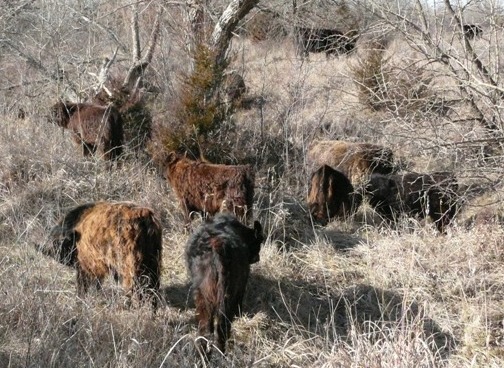
Fall-born calves forage during the 2006-07 winter.
Temperatures grew very cold, which meant daily trips to break ice on the pond. I would walk in the back way, cross the fence, break the ice and call them up. Never once did they bawl at me or try to follow me looking for a handout. After drinking, they would stand around chewing their cud or eating the buck brush and cedar trees. In all, we figure each cow wintering at that location received a total of around 270 pounds of hay over the course of the three and a half months prior to green up.
I calculated how much money we would have spent on prairie hay (usually around 5% protein) at this year's price of $90 per ton. If the average consumption would have been 25# per day, assuming we limit fed them (which would involve additional fuel and labor costs), for 90 days we would have spent $101.25 per animal (ignoring the hay consumption of the calves, even though some were August and September born), multiplied by 15 (the number of animals in the yearling to adult range), for a projected feed cost (and thus savings) of $1518.75. Now, do I think just any group of cattle could have been tossed in that place and asked to do what ours did? Not on your life. It comes down to the efficiency of our moderately framed Galloway cows, coupled with their non-selective grazing habits.
Incidentally, the fall calvers maintained their pregnancies, the calves were weaned in late April, healthy and happy, albeit a bit lighter than usual! To me, one of the beauties of the Galloway cow is her ability, and willingness, to do what needs to be done in order to wean off a healthy calf and rebreed in the process. She more than pays her own way!
For an interesting perspective on the value of the Galloway cow or Galloway-cross cow on the working ranch, http://www.galloway-world.org/intconf/welsch.htm.
See our Related Links page to find more information about Galloway cattle.
(A note about email! You probably already know this, but email can be unreliable at times. We always respond to every inquiry. So if you have emailed us and do not receive a reply within a day or two, please do give us a call.)
Share
© 2017 Renaissance Farms Ltd. All rights reservedDesign: Northwest Pathfinder, Linda Magyary
RFLTD Xenon
Denver 2011 Ultrasound results: Wgt 560#, REA 9.05, REA/CWT ratio 1.62, IMF 3.45%, BF .11 This calf was weaned in mid November and lightly fed 8 weeks until the show. He is presently at work in our herd siring our fall 2012 calf crop.
|
| RFLTD Xenon, dob 5/16/10, pictured 1/16/11 at the National Western Stock Show, Denver |
Nomad's Dreamer
RFLTD Nomad's Dreamer (below), 3 years of age, grazing fall pasture. He combines champion carcass genetics of the 1970's with Certified Meat Sire genetics of the late 60's and early 70's.
|
| RFLTD Nomad's Dreamer —Renaissance Farms Ltd |
McDuff
Renaissance Farms Ltd herdsire, McDuff of Lone Pine.
|
| McDuff —Renaissance Farms Ltd |
Add Galloway genetics to your beef program
Chances are you've landed on our breeding stock page because you already know you want to add Galloway genetics to your beef program. If calving-ease, hybrid vigor, carcass quality and feed efficiency are important factors in your beef program, you need Galloway genetics in your herd. Maternal efficiency is rapidly becoming one of the most significant attributes of the profitable cowherd. Galloway excel as an efficient maternal breed.
Galloway were known centuries ago for their durability in the wilds and their premium meat at the butchers block.
Our cattle are raised under a 'forage-only' plan. We expect our cattle to exhibit a strong foraging ability that lets them see to their own good growth and health.
The Galloway Haircoat: What you need to know!
Galloway grow a double haircoat as fall sets in, and by winter the outer guardhairs can reach lengths of 6 inches. This is their raincoat... the perfect mechanism for shedding rain and keeping snow accumulations from reaching the second layer of the haircoat, the soft downy heat conserving undercoat. Come summer... the coat sheds, with many Galloway becoming completely slick, while others may retain a short felt layer along their back and barrel. As the animals age, shedding occurs more quickly and more thoroughly. And that's what you need to know about Galloway haircoats!
Sericea lespedeza
Got Sericea? For years we've wondered if our Galloway would consume Sericea, but we've found it in our pastures on only one occasion. But in 2009 we leased an additional 32 acre pasture that lies adjacent to another lease. Mid summer we were disheartened to discover a patch of Sericea approximately 1/8 acre in size. The cattle had not had access to that pasture yet, but in early October about a dozen yearlings were added. Two weeks later we were checking cattle and noticed that the Sericea patch was completely gone... they had eaten it to the ground. This is what we observed. We will keep an eye on this pasture again this year, and post additional findings here. But Galloway are known to be non-selective grazers, and we have observed them regularly consuming plants that neighboring herds do not. So we think there is a very good liklihood that our Galloway will continue to dine on the Sericea, saving our landlord big money for control of this noxious weed.
Video: Galloway in winterReal Life Scenario
The winter of 2006-07 will be remembered by many in the Great Plains region as one of drought, hay shortages, and painfully high hay prices. Things in Kansas were certainly no exception. While we typically do not begin feeding hay to the cowherd until January, we found ourselves dipping into the hay supply in November, trying to stretch some very poor pasture for all it was worth (which wasn't much!).
About that time, we were given the chance to lease 85 acres of native grass and brush from a neighbor who had thinned down his herd. This parcel had rested all summer, and has about 50% brush and timber and 50% native. The native is primarily warm season grasses, and by December when we took possession, they were as cooked and bleached as they could be. But in under the brush and timber there was fescue and smooth brome grass. We turned 21 head in there on December 7, including 5 cows with their fall calves at side, some first calf heifers due to calve this summer, a few spring calving cows, and a 5-year old bull.
They received nothing from us until the second week of February, save an occasional square bale of alfalfa to teach them to come to the gate when called. Then in February we set out a round bale of grass hay, which they devoured in two days. We subsequently fed 3 more round bales, and fed them a couple of square bales of alfalfa about twice a week to bump up their protein as a means of increasing intake of the now completely dormant cool season grasses.
|
| Fall-born calves forage during the 2006-07 winter. |
Temperatures grew very cold, which meant daily trips to break ice on the pond. I would walk in the back way, cross the fence, break the ice and call them up. Never once did they bawl at me or try to follow me looking for a handout. After drinking, they would stand around chewing their cud or eating the buck brush and cedar trees. In all, we figure each cow wintering at that location received a total of around 270 pounds of hay over the course of the three and a half months prior to green up.
I calculated how much money we would have spent on prairie hay (usually around 5% protein) at this year's price of $90 per ton. If the average consumption would have been 25# per day, assuming we limit fed them (which would involve additional fuel and labor costs), for 90 days we would have spent $101.25 per animal (ignoring the hay consumption of the calves, even though some were August and September born), multiplied by 15 (the number of animals in the yearling to adult range), for a projected feed cost (and thus savings) of $1518.75. Now, do I think just any group of cattle could have been tossed in that place and asked to do what ours did? Not on your life. It comes down to the efficiency of our moderately framed Galloway cows, coupled with their non-selective grazing habits.
Incidentally, the fall calvers maintained their pregnancies, the calves were weaned in late April, healthy and happy, albeit a bit lighter than usual! To me, one of the beauties of the Galloway cow is her ability, and willingness, to do what needs to be done in order to wean off a healthy calf and rebreed in the process. She more than pays her own way!
For an interesting perspective on the value of the Galloway cow or Galloway-cross cow on the working ranch, http://www.galloway-world.org/intconf/welsch.htm.
See our Related Links page to find more information about Galloway cattle.
(A note about email! You probably already know this, but email can be unreliable at times. We always respond to every inquiry. So if you have emailed us and do not receive a reply within a day or two, please do give us a call.)
Share© 2017 Renaissance Farms Ltd.All rights reservedDesign: Northwest Pathfinder, Linda Magyary